
CHEMISTRY BELOW 16,404 FEET 2.394 INCHES DEEP
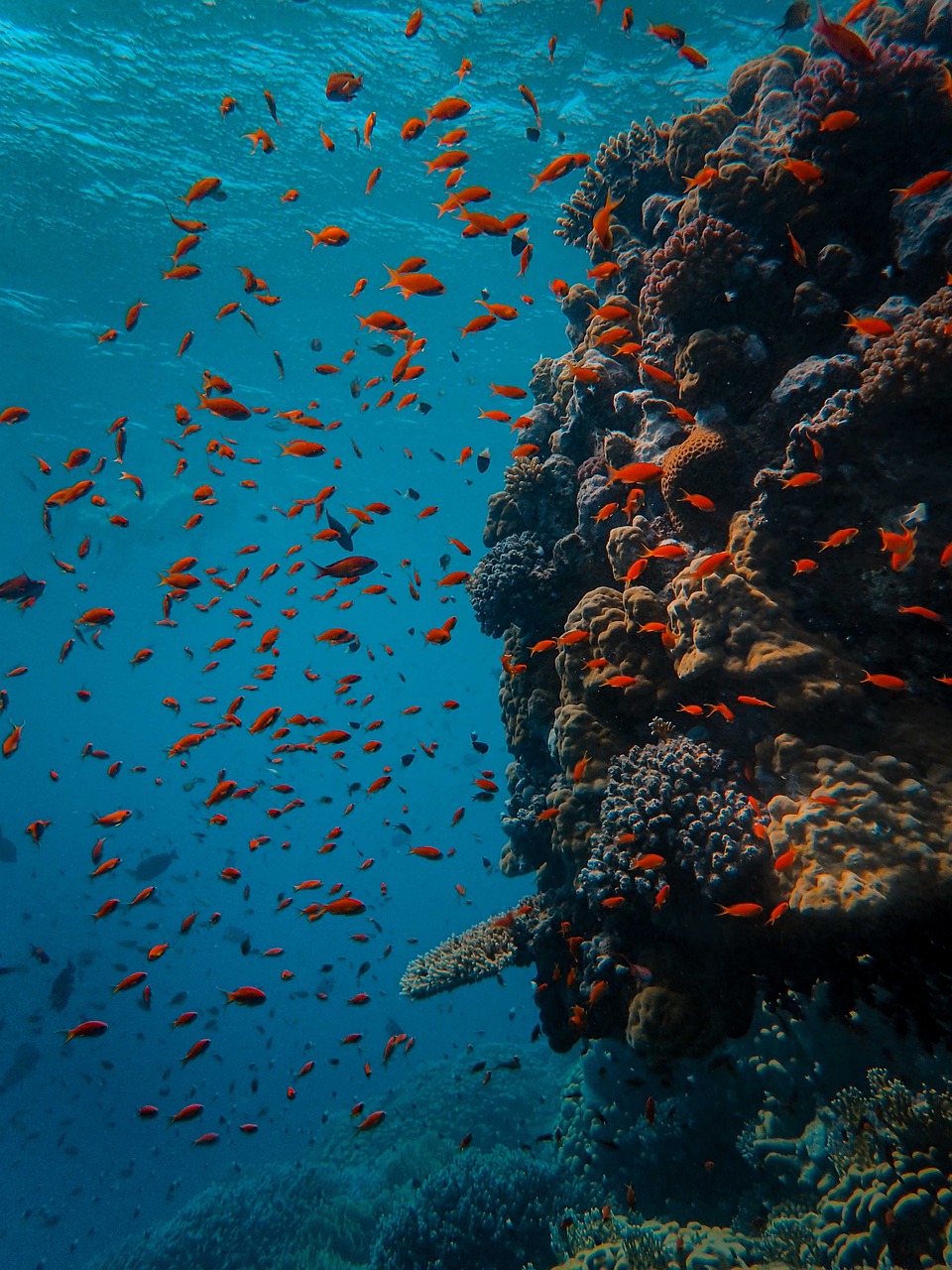
Since time immemorial, oxygen is said to be equally crucial for marine life as well as for land. It’s undoubtedly acknowledged that a high percentage of the source of oxygen is the ocean. Oxygen in the ocean is vital since most biological activities are performed with its aid. Processes like respiration, where marine organisms such as fish require oxygen to produce energy through cellular respiration for breathing and survival, and most importantly photosynthesis, where organisms like phytoplankton—microscopic algae—utilize sunlight to convert carbon dioxide and water into oxygen and organic matter consumed by other organisms, contribute to the entire ecosystem.
This indicates that oxygen underwater is of high value and marine life heavily relies on it for survival, evidence of which can be seen in dead zones where there is zero survival of marine life due to oxygen depletion.
Light Penetration and Ocean Zones
A major source of oxygen in the ocean is sunlight. According to the National Oceanic and Atmospheric Administration, sunlight can reach up to 1,000 meters deep in the ocean under ideal conditions, but meaningful light rarely penetrates beyond 200 meters.
Based on light levels and depth, the ocean is divided into three main zones. The euphotic zone (0–200 meters), also known as the sunlight zone, is where most ocean life thrives since it supports photosynthesis. Below this is the twilight zone (200–1,000 meters), where light is minimal and photosynthesis ceases to exist. From 1,000 meters downward lies the aphotic zone, a region of complete darkness.
The aphotic zone includes the bathypelagic zone (1,000–4,000 m), abyssopelagic zone (4,000–6,000 m), and hadopelagic zone (6,000 m and deeper), each characterized by extreme conditions. But what supports marine life beneath the hadopelagic zone where sunlight is entirely absent?
The Discovery of Dark Oxygen
In July 2024, this question was addressed by Andrew Sweetman of the Scottish Association for Marine Science (SAMS) while studying seafloor ecology and biogeochemistry in the Clarion-Clipperton Zone. This region, located at a depth of approximately 48,000 meters (13,100 feet), is rich in polymetallic nodules containing metals such as nickel, cobalt, and copper.
Despite the complete absence of sunlight, researchers discovered a phenomenon where oxygen is produced in extreme darkness—without sunlight or photosynthesis. This process was named “dark oxygen”, as it is produced chemically rather than biologically.
Electrochemistry in the Deep Ocean
This phenomenon is a remarkable example of chemistry occurring 16,404 feet 2.394 inches deep in the ocean. The Clarion-Clipperton Zone seafloor acts like a natural geobattery, splitting available water molecules through a process known as seawater electrolysis and producing oxygen.
Polymetallic nodules are rock-like formations rich in metals such as cobalt, nickel, manganese, and copper. These metals can behave like miniature batteries, splitting seawater into oxygen and hydrogen in a process similar to electrolysis. When exposed to cold seawater, the nodules release more oxygen than they consume.
Environmental Implications
While oxygen production without sunlight is a groundbreaking scientific discovery, it also provides a crucial explanation for how marine organisms survive in the darkest depths of the ocean. Dark oxygen may have long been sustaining ecosystems in these extreme environments.
However, this discovery raises serious concerns. The growing demand for deep-sea minerals could lead to extensive mining of polymetallic nodules. Such activities may disrupt the natural production of dark oxygen, potentially leading to its permanent depletion and causing devastating consequences for deep-sea marine life.
The discovery of dark oxygen reshapes our understanding of marine ecosystems and their resilience. It reveals the ocean’s hidden ability to sustain life through non-biological processes like seawater electrolysis. At the same time, it emphasizes the urgent need to preserve deep-sea ecosystems to protect one of the ocean’s most vital life-supporting mechanisms.
 Written by: Duaa Ahmad
Similar Post You May Like
-
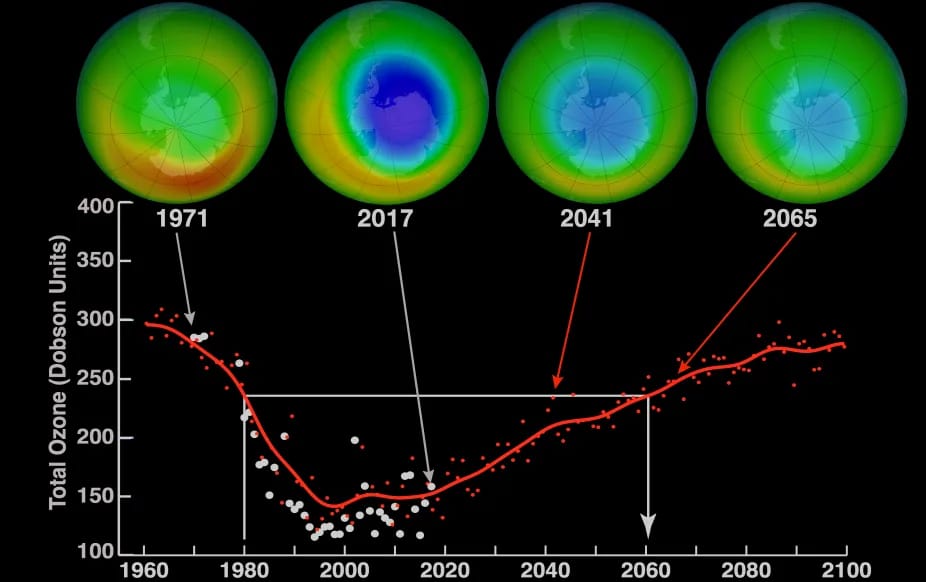
CFCs, HFCs and their long, troubled history
At its peak, the ozone hole covered an area 7 times larger than the size of Europe, around 29.9 million km2, and was rapidly expanding
-
The Origin of Universe: Deciding point where it all began!
Let us unravel and surf through the ideas throughout ages to understand what the universe and its origin itself was to its inhabitants across history.
-
The Artemis Program
Inspired by the Greek goddess of the Moon, twin sister to Apollo, the artimis program was named on 14 May 2019 by Jim Bridenstine.
Recent Post
-

Second Brain in Your Belly? Inside the Fascinating Gut-Brain Connection
Ever wondered why you feel butterflies in your stomach? That gut-wrenching feeling in the pit of your stomach might not be as insignificant as it seems.
-

The AI Arms Race: Boon or Bane for National Defense?
Artificial intelligence (AI) is rapidly transforming industries, and the defence sector is no exception.
-

Unveiling the Oldest Black Hole: A Cosmic Odyssey with the James Webb Space Telescope
In a groundbreaking revelation, astronomers using the James Webb Space Telescope (JWST) have uncovered the existence of the oldest black hole ever discovered
-

Hubble's Iconic Journey into the Depths of the Universe
arguably the greatest technological breakthrough of its time, now have over three decades of service.
-

The Metaverse: Exploring Its Concept, Potential, and Social Implications
The metaverse encompasses a vast and interconnected digital universe where users can interact, create, explore, and collaborate
-

The Man, the Myth, and the Mathematical Legacy
Pythagoras, the enigmatic figure whose name is forever intertwined with the famous theorem, emerges from the mists of ancient Greece as a polymath of profound influence.