
Weird But True: Evolution's Greatest Plot Twists

Whenever we hear about evolution, all that comes to mind are slow changes, fossils, and Charles Darwin’s theory. But evolution isn't as dull as it seems. Nature has some of the strangest plot twists in history—some amusing, some bizarre, and some absolutely mind-blowing.
According to Merriam-Webster Dictionary, evolution is "a biological process in which new species develop from preexisting forms through successive generations." It is a process where living organisms slowly change to adapt to their surroundings over millions or even billions of years. This remodeling of organisms occurs through natural selection, first proposed by Charles Darwin and Alfred Russel Wallace in 1859. In Darwin's On the Origin of Species, he explained that organisms with advantageous traits are more likely to survive and reproduce, passing these traits on to future generations. For example, polar bears evolved from brown bears to develop camouflage in colder environments.
Birds Were Dinosaurs
A famous example is that birds used to be dinosaurs. Fossils from South America, China, and other regions have confirmed this. In 1861, a fossil named Archaeopteryx was discovered, showing traits of both birds and small carnivorous dinosaurs called Theropods. Some theropods evolved feathers for flight and camouflage after moving into trees over millions of years, giving them advantages over other dinosaurs.
Horses Used to Be Dog-Sized
Early horses, such as Hyracotherium or "Eohippus," were about the size of a dog. They lived 55 million years ago on soft forest grounds with four toes on the front feet and three on the back. As the climate and terrain changed, horses evolved longer legs and fused toes into single hooves, becoming the fast, large animals we see today.
Whales Were Once Land Animals
Modern whales evolved from terrestrial ancestors called Pakicetus, four-legged land animals adapted for running. Over 50 million years, their legs became flippers, nostrils moved to blowholes, and their bodies streamlined for swimming. Vestigial leg bones in whales today are evidence of their terrestrial past.
Giraffe Neck Evolution
Earlier, Lamarck proposed that giraffes got long necks by stretching to reach higher leaves. Darwin’s natural selection theory suggests giraffes with longer necks survived scarcity, passing this trait to offspring. Longer necks may also have helped giraffes fight competitors.
Vestigial Organs in Humans
Humans also show evolution through vestigial organs—body parts that lost most of their function. Examples include the appendix, wisdom teeth, and the tailbone (coccyx), which was once used for balance in four-legged ancestors.
Conclusion
From birds evolving from dinosaurs to whales once walking on land, evolution has countless fascinating twists. Nature constantly surprises us, and evolution continues as long as life exists. So next time you think of evolution, remember it is full of wonders and plot twists.
References
- Merriam-Webster: Definition of Evolution
- Britannica: Archaeopteryx
- Wired: Archaeopteryx not a bird?
- Britannica: Dawn Horse (Eohippus/Hyracotherium)
- AMNH: Evolution of Horses
- Britannica: Evolution of Horses
- Nature Was Metal (Reddit): Pakicetus fossils & whale evolution
- Britannica: Evolution (scientific theory)
 Written by: Hafsa Sikandar
Similar Post You May Like
-
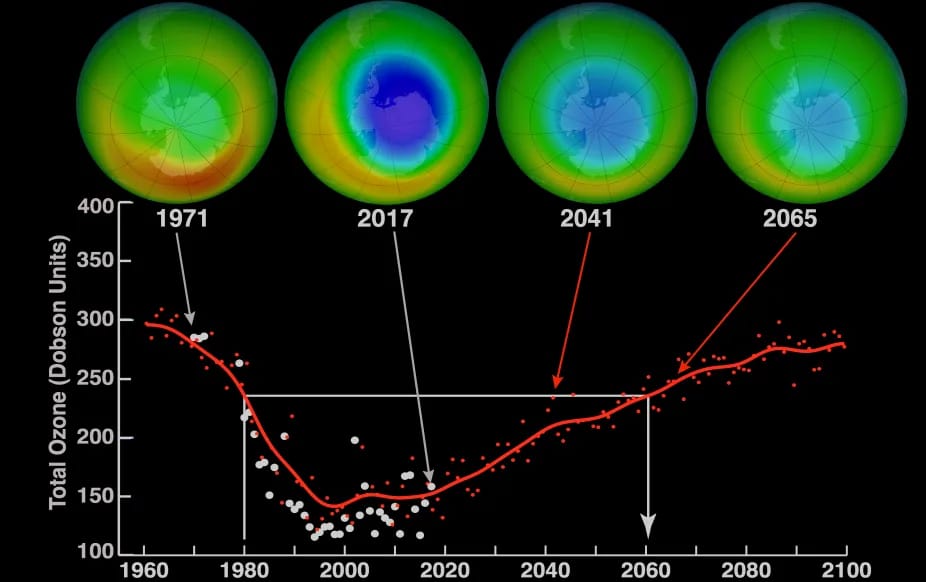
CFCs, HFCs and their long, troubled history
At its peak, the ozone hole covered an area 7 times larger than the size of Europe, around 29.9 million km2, and was rapidly expanding
-
The Origin of Universe: Deciding point where it all began!
Let us unravel and surf through the ideas throughout ages to understand what the universe and its origin itself was to its inhabitants across history.
-
The Artemis Program
Inspired by the Greek goddess of the Moon, twin sister to Apollo, the artimis program was named on 14 May 2019 by Jim Bridenstine.
Recent Post
-

Second Brain in Your Belly? Inside the Fascinating Gut-Brain Connection
Ever wondered why you feel butterflies in your stomach? That gut-wrenching feeling in the pit of your stomach might not be as insignificant as it seems.
-

The AI Arms Race: Boon or Bane for National Defense?
Artificial intelligence (AI) is rapidly transforming industries, and the defence sector is no exception.
-

Unveiling the Oldest Black Hole: A Cosmic Odyssey with the James Webb Space Telescope
In a groundbreaking revelation, astronomers using the James Webb Space Telescope (JWST) have uncovered the existence of the oldest black hole ever discovered
-

Hubble's Iconic Journey into the Depths of the Universe
arguably the greatest technological breakthrough of its time, now have over three decades of service.
-

The Metaverse: Exploring Its Concept, Potential, and Social Implications
The metaverse encompasses a vast and interconnected digital universe where users can interact, create, explore, and collaborate
-

The Man, the Myth, and the Mathematical Legacy
Pythagoras, the enigmatic figure whose name is forever intertwined with the famous theorem, emerges from the mists of ancient Greece as a polymath of profound influence.