
Rethinking Agriculture: Nutrient Film Technique (NFT)

A Look at the Nutrient Film Technique
According to the Food and Agriculture Organization, “Covering an area of 30.5 million hectares, about 47 percent of Pakistan’s national land is agricultural land, higher than the global average of 38 percent.”
Farming has traditionally revolved around soil—digging, planting, watering, and waiting. However, climate change, urbanization, and land scarcity are forcing growers to rethink this age-old relationship. Increasingly, many are choosing to bypass soil entirely.
One such approach is the Nutrient Film Technique (NFT). Though it may sound complex, NFT is actually one of the simplest and most efficient hydroponic systems available. Developed in the 1970s by scientist Allen Cooper, NFT is widely used today in commercial greenhouses in countries like the Netherlands and even in small-scale home setups.
How It Works
NFT systems consist of long trays with shallow channels where plants are placed. Their roots hang into these channels, while a thin, continuous stream of nutrient-rich water flows past them from one end to the other and drains back into a reservoir using gravity.
Plants do not drown because the water layer is extremely thin, allowing roots access to oxygen. As Kevin from epicgardening.com notes, “It has the word ‘film’ in it for a reason.”
The nutrient solution circulates continuously with the help of a small pump, forming a simple loop system. There are no complex machines involved—just water, nutrients, gravity, and plants growing efficiently.
Crops with smaller root systems perform best in NFT systems. Lettuce is a classic example, along with herbs like basil and mint. Some growers also experiment with strawberries and baby spinach.
Larger crops such as corn and tomatoes are less suitable due to their weight and extensive root systems. As noted by trees.com, these plants require additional structural support, such as self-standing trellis systems.
Why People Use It
One of NFT’s biggest advantages is water efficiency. Since the system recycles water continuously, it wastes far less water than traditional farming methods, where water is often lost through seepage or evaporation.
This makes NFT especially useful in water-scarce regions. Pakistan, for instance, faces ongoing water security concerns due to climate pressures and geopolitical tensions.
Plant growth is also faster. With constant access to nutrients and oxygen, plants do not need to expend energy searching for resources, resulting in quicker growth cycles.
Without soil, NFT systems avoid many soil-borne pests and weeds, reducing pesticide use. However, water-based systems can still spread fungal or bacterial diseases if not properly managed.
Space efficiency is another major benefit. NFT setups can be arranged vertically or along walls, making them ideal for urban environments.
Drawbacks (Because Nothing’s Perfect)
NFT systems are highly dependent on continuous water flow. If the pump fails or electricity cuts out—a common issue in cities like Karachi—roots can dry out quickly due to the absence of a soil buffer.
Disease spread is another concern. Since all plants share the same water source, infections can spread rapidly if cleanliness and monitoring are neglected.
Additionally, certain crops such as tomatoes require system modifications for adequate support. Despite these challenges, NFT remains an excellent option for leafy greens.
Compared to Other Hydroponic Systems
NFT is just one of several soil-less farming techniques. Deep Water Culture (DWC) involves suspending plant roots in oxygenated water and is relatively low-cost.
Drip systems deliver water slowly through tubes directly to plant bases, allowing precise control but requiring more complex setup.
Ebb and flow systems periodically flood and drain plant trays using timers, making them similar to NFT in operation.
What sets NFT apart is its simplicity, compact design, and water efficiency—though it demands consistent monitoring.
Soil-Based Farming Still Has a Place
Traditional farming remains essential. It requires no electricity, supports a wide range of crops, and is accessible to rural populations.
However, soil farming faces challenges such as nutrient depletion, erosion, pests, and higher land requirements.
NFT systems, in contrast, enable food production in unconventional spaces like rooftops, urban centers, and arid regions. With controlled environments, plants can focus energy on growth rather than survival.
Real-World Cases of NFT Use
Many companies grow lettuce and herbs using NFT systems, supplying supermarkets directly. Indoor farms in Toronto use NFT to ensure year-round production despite harsh winters.
In Paris, Wesh Grow operates underground and rooftop hydroponic farms supplying fresh produce to over 500 restaurants.
Educational institutions also use NFT systems. New York Sun Works has established hydroponic classrooms in over 300 schools, reaching more than 100,000 students annually.
Teens for Food Justice installs hydroponic farms in food-insecure NYC schools, producing thousands of pounds of vegetables for cafeterias and local communities.
Final Thoughts
The Nutrient Film Technique may not resemble traditional farming, but it is real agriculture adapted for modern challenges. It is not a universal solution, but it represents a smarter and more efficient approach in resource-limited, urbanized environments.
Pakistan could greatly benefit from adopting NFT systems, particularly in urban and arid regions. However, challenges such as electricity shortages, maintenance requirements, and accessibility must be addressed through policy support, training programs, and affordable technology.
Note: AI was used to make minor enhancements and suggest changes to the pre-written concluding paragraph.
References
- epicgardening.com – Nutrient Film Technique
- trees.com – Nutrient Film Technique
- University of Florida IFAS Extension – Hydroponics NFT System
- edengreen.com – Nutrient Film Technique
- getgrowee.com – Hydroponic Water Usage
- benehorti.com – Hydroponic Systems Pros & Cons
- hydroplanner.com – NFT Systems
- hydroponicsfactory.com – Canadian NFT Case Study
- cntraveler.com – Paris Urban Agriculture
- nysunworks.org
- agritecture.com – Hydroponics in Urban Schools
 Written by: Fatima Khan
Similar Post You May Like
-
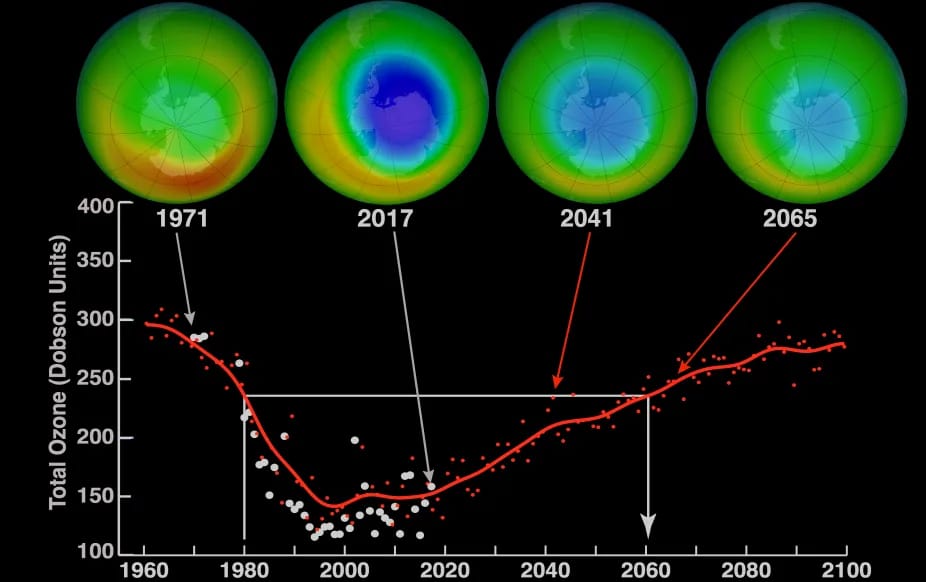
CFCs, HFCs and their long, troubled history
At its peak, the ozone hole covered an area 7 times larger than the size of Europe, around 29.9 million km2, and was rapidly expanding
-

The Origin of Universe: Deciding point where it all began!
Let us unravel and surf through the ideas throughout ages to understand what the universe and its origin itself was to its inhabitants across history.
-
The Artemis Program
Inspired by the Greek goddess of the Moon, twin sister to Apollo, the artimis program was named on 14 May 2019 by Jim Bridenstine.
Recent Post
-

Second Brain in Your Belly? Inside the Fascinating Gut-Brain Connection
Ever wondered why you feel butterflies in your stomach? That gut-wrenching feeling in the pit of your stomach might not be as insignificant as it seems.
-

The AI Arms Race: Boon or Bane for National Defense?
Artificial intelligence (AI) is rapidly transforming industries, and the defence sector is no exception.
-

Unveiling the Oldest Black Hole: A Cosmic Odyssey with the James Webb Space Telescope
In a groundbreaking revelation, astronomers using the James Webb Space Telescope (JWST) have uncovered the existence of the oldest black hole ever discovered
-

Hubble's Iconic Journey into the Depths of the Universe
arguably the greatest technological breakthrough of its time, now have over three decades of service.
-

The Metaverse: Exploring Its Concept, Potential, and Social Implications
The metaverse encompasses a vast and interconnected digital universe where users can interact, create, explore, and collaborate
-

The Man, the Myth, and the Mathematical Legacy
Pythagoras, the enigmatic figure whose name is forever intertwined with the famous theorem, emerges from the mists of ancient Greece as a polymath of profound influence.