
Beyond Earth or Back to the Basics: Do We Have to Colonize Other Worlds or Fix What's Wrong with Our Own?
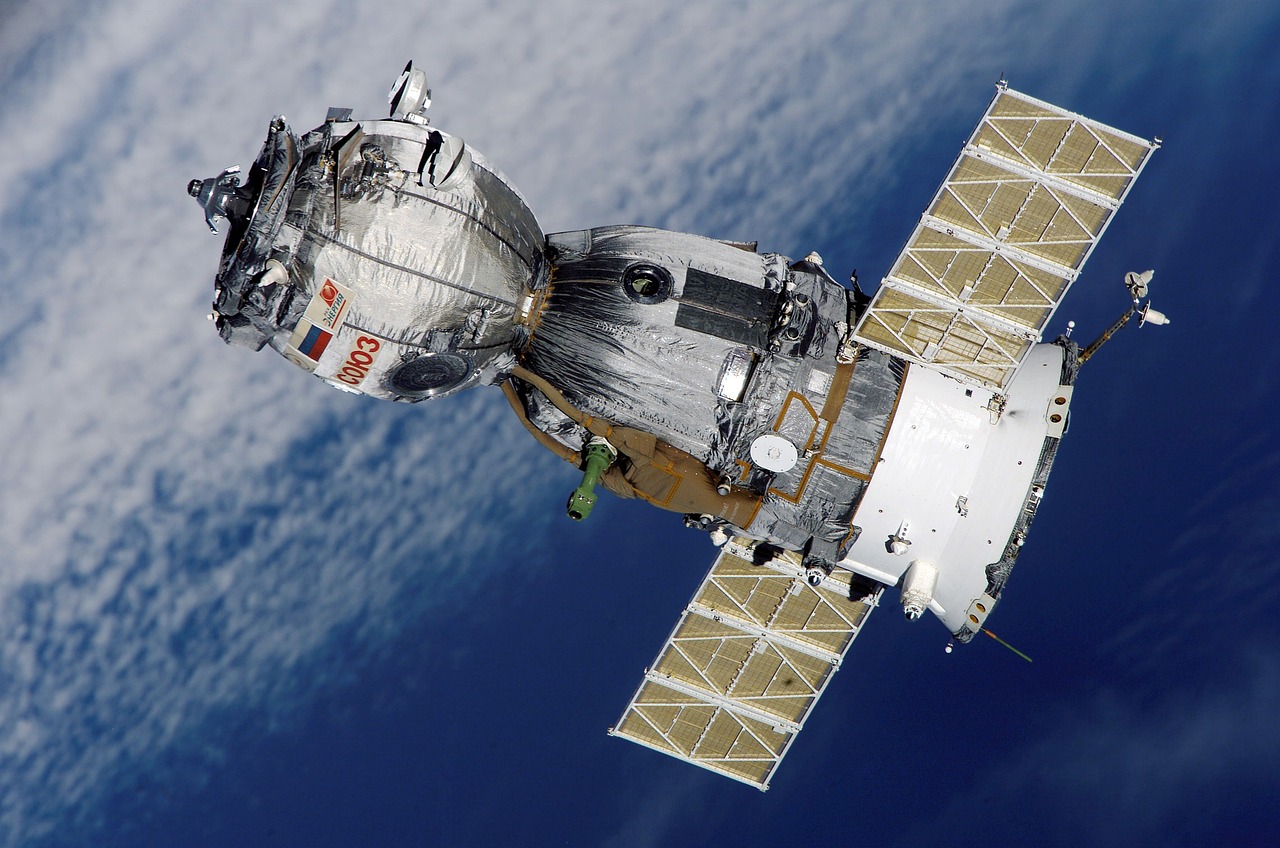
In 1990, NASA's Voyager 1 spacecraft turned back for one final photograph of Earth. The image, famously described by Carl Sagan as the "Pale Blue Dot", showed our planet as a tiny speck suspended in a sunbeam—home to everything humanity has ever known.
More than three decades later, that image resonates more strongly than ever. As Earth faces climate collapse, biodiversity loss, and escalating pollution, some look toward the stars for salvation. Others argue that survival depends not on escape, but on repair.
This debate—colonizing other worlds or fixing Earth—is not purely scientific. It is a question of values, responsibility, and the legacy humanity chooses to leave behind.
The Allure of Other Worlds
As of August 2025, scientists have confirmed over 5,600 exoplanets, nearly 60 of which lie in the so-called Goldilocks zone—regions around stars where liquid water could exist. Among the most promising candidates are:
- Kepler-442b: Located 1,206 light-years away in the constellation Lyra, with a 97% Earth similarity score.
- Proxima Centauri b: Just 4.2 light-years away, orbiting the closest star to our solar system, though exposed to intense stellar radiation.
- TRAPPIST-1e, f, and g: Three Earth-sized planets within the habitable zone of a seven-planet system, potentially capable of supporting liquid water.
Despite their allure, accessibility remains a major obstacle. Even reaching Alpha Centauri would require more than 6,000 years using current propulsion technology.
Mars: A Stepping Stone, Not a Destination
Mars has long captivated public imagination. Space agencies including NASA, SpaceX, and China's National Space Administration have announced plans for human missions in the coming decades, with SpaceX aiming for crewed missions as early as 2030.
However, Mars presents severe challenges. Its atmospheric pressure is only 0.6% of Earth’s, it lacks a protective magnetic field, and surface temperatures can plunge to –125°C.
Terraforming Mars would require centuries—if not millennia—and technologies that do not yet exist. NASA estimates that releasing all available carbon dioxide would yield only 7% of the atmospheric pressure needed for unprotected human survival.
In short, Mars may serve as a valuable research outpost, but it is not a viable refuge for humanity.
The Cost of Cosmic Colonization
Establishing sustainable off-world colonies requires overcoming immense barriers:
- Radiation exposure: Astronauts outside Earth’s magnetosphere face up to 200 times more cosmic radiation.
- Microgravity effects: Long-term exposure causes bone loss, muscle atrophy, vision impairment, and cardiovascular strain.
- Logistics: Transporting supplies to Mars can cost over $2.7 million per kilogram, making sustained settlement financially prohibitive.
- Life support systems: Closed ecological systems remain experimental, with no mission sustaining one for more than two years.
Given the risks and costs, space colonization is not a practical short-term solution to Earth’s crises.
Earth: A Planet Worth Saving
Earth remains the only known planet capable of sustaining complex life. Its gravity, stable atmosphere, liquid water cycle, and biodiversity are the product of billions of years of evolution.
Encouragingly, global efforts to address environmental decline are gaining momentum:
- Renewable energy supplied nearly 30% of global electricity in 2023.
- Costa Rica has operated on almost 100% renewable electricity for much of the past decade.
- Bhutan remains one of the few carbon-negative nations.
- China’s Great Green Wall has planted over 66 billion trees since 1978.
- Ocean cleanup initiatives have removed more than 10 million kilograms of plastic.
Emerging technologies such as vertical farming, carbon capture, and AI-optimized energy grids further demonstrate that sustainability and progress are not mutually exclusive.
The Ethical Dilemma
Colonizing another planet raises profound ethical concerns. The immense costs would restrict access to a privileged few, potentially deepening global inequality.
There is also the question of responsibility: if humanity has struggled to protect Earth, what guarantees exist that a new world would be treated differently?
Planetary protection protocols, defined by COSPAR, further complicate colonization by requiring the prevention of biological contamination of other worlds.
“You will bring those same issues with you into space if you repeat the systems that cause inequality, oppression, and devastation on Earth.”
Is There a Middle Path?
While abandoning space exploration is neither realistic nor desirable, its role should be complementary to planetary preservation rather than a substitute for it.
- Moon bases and space stations to test sustainable life-support systems
- Asteroid mining to reduce ecological damage on Earth
- Space-based solar power to provide clean energy
These innovations could enhance Earth’s sustainability instead of replacing it.
Conclusion: The Choice Is Ours
The dream of colonizing other worlds speaks to humanity’s curiosity and ambition. But it must not become an excuse for neglecting our responsibility to Earth.
Earth is not a disposable launchpad—it is our only functioning biosphere. Colonization may one day be feasible for small populations, but it is neither scalable nor ethical as a solution to today’s problems.
Before reaching for the stars, humanity must prove itself worthy of them.
References
- NASA Exoplanet Archive. (2025). Exoplanet Exploration Program.
- International Energy Agency. (2024). Renewables 2024.
- The Ocean Cleanup. (2024). Project Updates.
- COSPAR Panel on Planetary Protection. (2023). Policy and Guidelines.
- Nesvold, E. (2023). Off-Earth. MIT Press.
- United Nations Environment Programme. (2024). The State of the Planet 2024.
- Tsiolkovsky, K. E. (1911). The Exploration of Cosmic Space by Means of Reaction Devices.
 Written by: Ali Zain
Similar Post You May Like
-
CFCs, HFCs and their long, troubled history
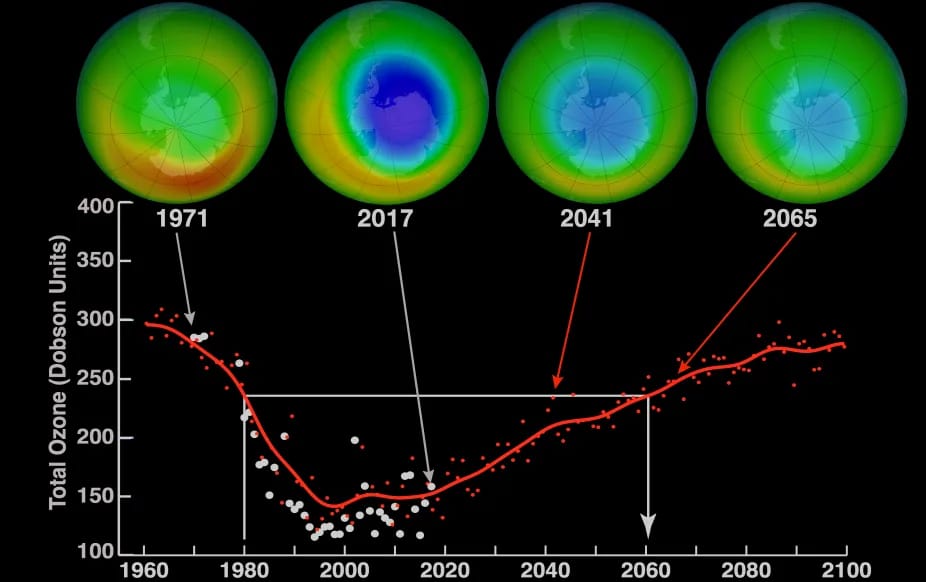
At its peak, the ozone hole covered an area 7 times larger than the size of Europe, around 29.9 million km2, and was rapidly expanding
-
The Origin of Universe: Deciding point where it all began!
Let us unravel and surf through the ideas throughout ages to understand what the universe and its origin itself was to its inhabitants across history.
-
The Artemis Program
Inspired by the Greek goddess of the Moon, twin sister to Apollo, the artimis program was named on 14 May 2019 by Jim Bridenstine.
Recent Post
-

Second Brain in Your Belly? Inside the Fascinating Gut-Brain Connection
Ever wondered why you feel butterflies in your stomach? That gut-wrenching feeling in the pit of your stomach might not be as insignificant as it seems.
-

The AI Arms Race: Boon or Bane for National Defense?
Artificial intelligence (AI) is rapidly transforming industries, and the defence sector is no exception.
-

Unveiling the Oldest Black Hole: A Cosmic Odyssey with the James Webb Space Telescope
In a groundbreaking revelation, astronomers using the James Webb Space Telescope (JWST) have uncovered the existence of the oldest black hole ever discovered
-

Hubble's Iconic Journey into the Depths of the Universe
arguably the greatest technological breakthrough of its time, now have over three decades of service.
-

The Metaverse: Exploring Its Concept, Potential, and Social Implications
The metaverse encompasses a vast and interconnected digital universe where users can interact, create, explore, and collaborate
-

The Man, the Myth, and the Mathematical Legacy
Pythagoras, the enigmatic figure whose name is forever intertwined with the famous theorem, emerges from the mists of ancient Greece as a polymath of profound influence.